Chipboard FAQs
What is chipboard made of?
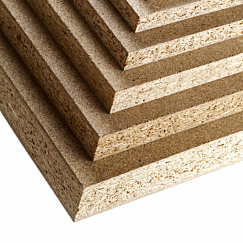
Chipboard is made from wood chips, shavings, sawdust, sawmill waste, or even recycled wood particles. They are mixed with a synthetic resin adhesive, and then formed into layers and compressed under high heat and pressure to create rigid, flat sheets. This manufacturing process allows chipboard to make efficient use of wood waste and recycled resources.
What are the benefits of using chipboard?
Chipboard is a highly cost-effective wood-based panel, making it popular for large-scale and budget-conscious projects, in both commercial and residential settings. It has a consistent density and flat surface, which makes it easy to laminate, veneer, or finish with melamine coatings. Its uniform composition also makes it free of any natural defects, providing predictable performance in furniture and interior applications.
Chipboard also offers reasonable strength and good screw-holding performance when fixings are used correctly. The density of the chipboard directly impacts its screw-holding strength. We rigorously test our chipboard to ensure it meets the highest standards for various fastening methods.
What are the different types of chipboard?
Chipboard is available in several grades designed for different uses:
-
Standard chipboard: Intended for dry, indoor environments.
-
Moisture-resistant (MR) chipboard: Manufactured with moisture-repellent resins to reduce swelling in humid conditions.
-
Fire-retardant chipboard: Treated to improve fire resistance and meet specific building regulations.
-
Exterior-grade chipboard: Specially engineered for limited exposure to moisture, though it's important to note that it does still require protection and maintenance to remain durable in exterior applications.
Each type is selected based on environmental conditions and performance requirements.
What are common uses for chipboard?
Chipboard is commonly used in interior construction, furniture manufacturing, cabinet making and flooring applications.
Common uses include furniture carcasses, shelving units, wardrobes, kitchen cabinets, internal fittings, walls, and office furniture. Chipboard loft panels can be used as ceiling linings.
Its affordability and versatility make it a staple material in the furniture industry.