

Like many things in life, it's only when you experience it first hand, that you truly understand the challenges. Designing a living space for elderly residents goes beyond accessibility. With so many factors to consider, this requires much more thought than one may originally see on the surface. After all, behind every design decision is a resident who simply wants to feel safe, comfortable and at home.
For residents with dementia, reflections can cause confusion, anxiety and reluctance to move around spaces. Keeping at the forefront of your mind what may look stylish in a residential kitchen can present real challenges in a care environment. High gloss doors should be avoided at all costs in the whole designing process for this sector. Use of them on wall panels, doors or worktops can create reflections that may be mistaken for wet surfaces or obstacles. A matt finish is most definitely the preferred option, minimising glare thus creating a calm environment. This is especially valuable for floors, door frontals, furniture panels and edging.
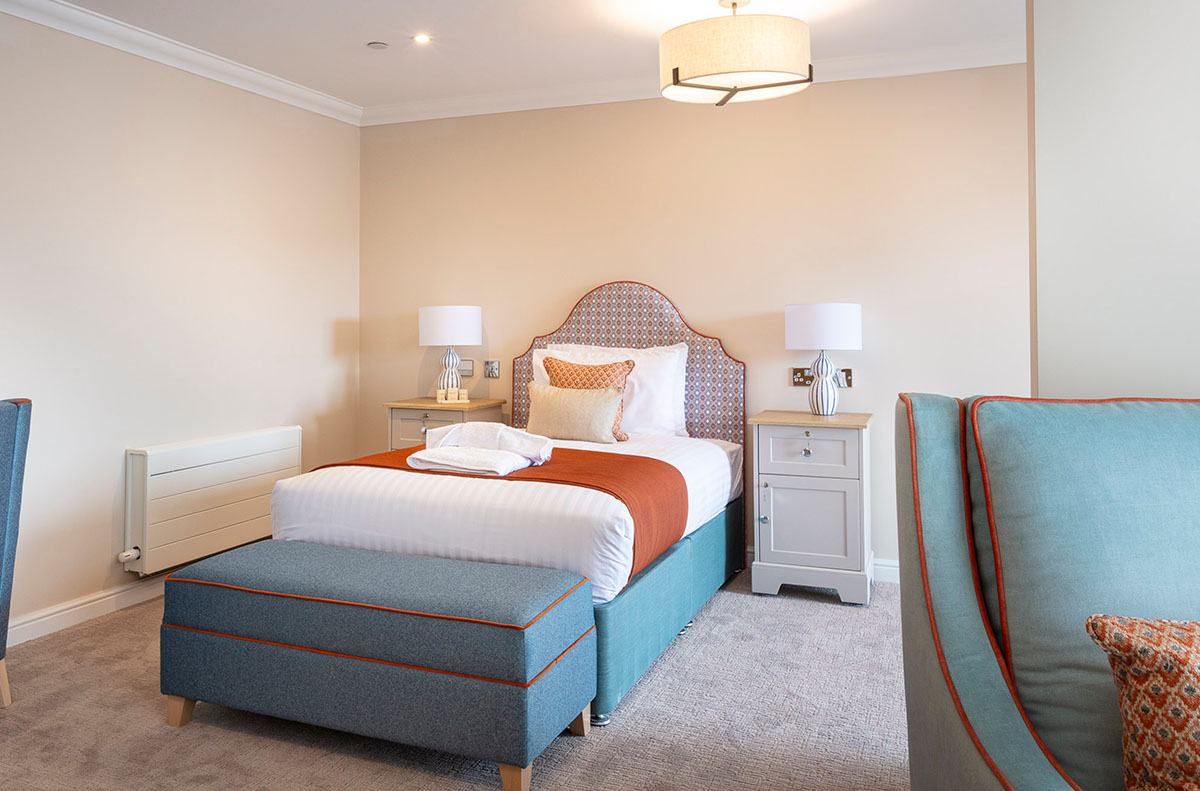
Photo credit: https://kilworth.co.uk/projects/waterhaven-place-chichester/
Colours also take careful consideration. As many of us know from our own parents or grandparents, eyesight tends to naturally change with age which makes it trickier to distinguish between surfaces. Offering contrast between colours is the answer. It has to be carefully done as dark colours can often be perceived as holes, unsafe areas or changes in level.
Avoiding busy patterns is another key design point to bear in mind. Abstract design, highly patterned woodgrains or marble effects can be problematic. They can be visually confusing, making dementia sufferers perceive the veining as cracks or knots as holes.
So how can thoughtful design make everyday life easier? Think soft stone, natural textures and subtle woodgrains. Offer rounded corners on furniture, postformed worktops and durable, impact resistant materials that won't wear easily with mobility aids, wheelchairs or hoists. They need to be easy to clean and fingerprint resistant with no deep grooves to ensure cleanliness, this is key in a care home environment with vulnerable residents. When it comes to improving comfort and reducing stress the key here is nature inspired designs and soft, lightly patterned woodgrain panels.
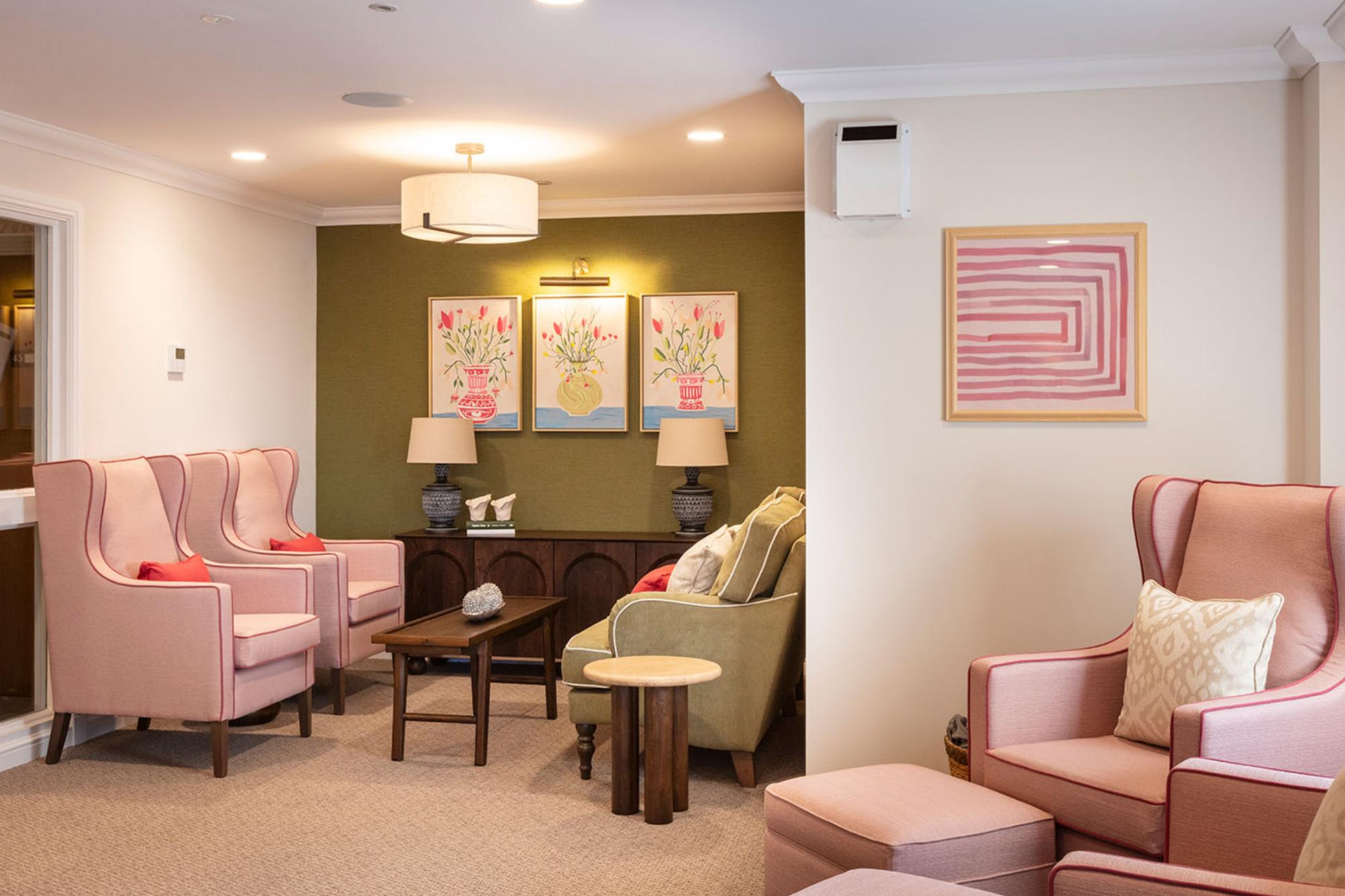
Photo credit: https://kilworth.co.uk/projects/willowbrook-view-wichelstowe/
Each area of a care facility should be carefully considered, all focussed around the residents' needs. Sensory gardens help to encourage residents to move more whilst reducing agitation.
The final factor to consider is the sound aspect. Hard surfaces can create echo and reverberation, both of which can cause difficulty with conversations.
Decorative surfaces may seem like a small part of the overall design, however, they can play a significant role in supporting independance, safety, comfort and wellbeing. In environments where every detail matters, thoughtful material selection can make a real difference to everyday life.
To explore our range of decorative panels, laminates and surface solutions, browse our website or contact our sales team for further information.
Check out our latest news stories here!